Petsparade is reader supported, and when you buy through links on our site, we may earn an affiliate commission as an Amazon Associate from qualifying purchases. Learn More.
An automatic litter box keeps the tray cleaner by removing waste after each visit, helping to maintain better hygiene for multiple cats while reducing the time you spend on daily maintenance. Many modern robotic litter boxes also include smart safety sensors, app controls and effective odour control systems, making it easier to keep your home fresh.
In this guide, we’ve compared the most reliable self cleaning litter boxes for two cats available in the UK, focusing on cleaning performance, capacity, safety, ease of maintenance and long-term value to help you choose the right model for your home.
A top-tier, near‑silent self-cleaning system that drastically reduces daily maintenance and integrates with smart home tools. It’s ideal if you want reliable automation and a long warranty, but expect a significant upfront investment and a large footprint.
Extremely effective at separating waste — minimal scooping required
Robust app monitoring and smart home compatibility
Generous warranty and build quality designed for longevity
High sides and included step & fence reduce litter scatter
Cons
High purchase price and replacement part cost compared with basic models
Large and heavy — needs generous space and may be tricky to move
Overview
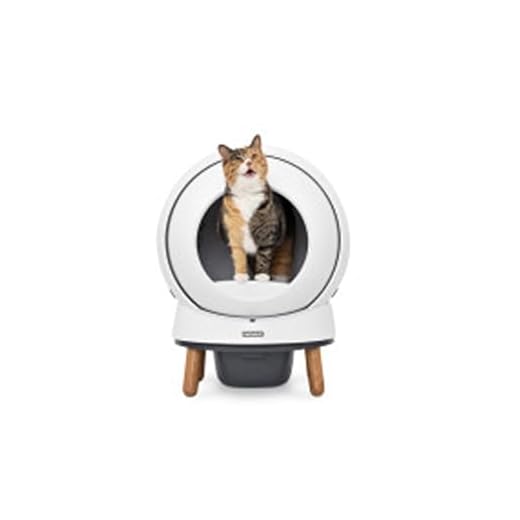
The Litter-Robot 4 is Whisker's flagship automatic litter box, designed to reduce the daily chore of scooping, particularly in homes with one or multiple cats. Its motorised rotating globe automatically separates clumped waste from clean litter after each use, depositing it into a sealed waste drawer that only needs emptying when full.
Combined with a spacious interior, advanced safety sensors and effective odour control, it offers a practical, low-maintenance solution for owners looking to keep the litter tray cleaner with minimal effort.
Key Features
Smart app control with real-time activity tracking and cleaning cycle notifications, helping you monitor your cats' litter box habits.
High-sided design with an included step and fence to reduce litter scatter while making entry easier for kittens, older cats and smaller breeds.
Backed by a two year WhiskerCare warranty for added peace of mind and long-term ownership confidence.
Benefits in everyday use
You’ll typically only need to empty the waste drawer every few days to weeks depending on usage, which cuts daily scooping time drastically. Owners often report improved household cleanliness and fewer odour complaints compared with manual scooping.
The app gives peace of mind: you can check cycle status and receive alerts if the unit needs attention, useful if you’re away from home.
Limitations and practical tips
The unit is sizeable and heavy; plan where it will live and how you’ll move it for deep cleaning. A few owners recommend leaving a small clearance around the unit to make drawer changes painless.
Budget for occasional replacement parts (carbon filters, liners) and be prepared for a larger initial expense compared with non‑automated trays. If noise is a concern, the LR4 is quieter than earlier models but still audible during cycles.
Best for Multi‑Cats
2
PETKIT Pura Max 2 76L Multi‑Cat Tray
Best for large multi‑cat households
8.8/10
EXPERT SCORE
A thoughtfully designed tray for multiple cats with large capacity, per‑cat tracking and strong odour control technology. It balances features and price well but brings complexity — the app and settings take a short learning curve to master.
Very large 76L capacity designed for multiple cats
Smart app with per‑cat weight identification and health logs
Eleven safety sensors and anti‑pinch features improve reliability
Dedicated odour control (N50) and one‑key litter emptying
Cons
App and setup can be fiddly for less technical users
Ongoing maintenance and occasional firmware updates may be required
Overview
The PETKIT Pura Max 2 is an extra‑large, app‑enabled self‑cleaning litter tray built to handle the demands of multi‑cat homes. It focuses on capacity, odour management and individual cat monitoring through weight‑based identification.
What you’ll find useful
A 76L body that reduces how often you need to top up or clean the tray in a multi‑cat scenario.
App control that records toilet frequency, duration and weight profiles so you can spot subtle health changes early.
Eleven safety sensors and anti‑pinch design aimed at preventing accidents and false cycles.
Everyday benefits and examples
If you have two cats or more, the larger interior and automatic emptying mean you’re less likely to be emptying waste every day. Users say it frees up time and keeps odours under control much better than a standard box.
The per‑cat logging is useful when one of your cats is on medication or you’re monitoring a suspected urinary issue; you can check whether a particular cat’s usage pattern has changed.
Caveats and practical advice
Allow time to learn the app and calibrate the unit to recognise the weight of each cat — initial setup can be the most time consuming part of ownership.
Although odour control is strong, you’ll still need periodic deep cleans and occasional replacement of filters and consumables. Keep spares to hand if you dislike interruptions.
Premium Multi‑Cat
3
CATLINK Pro‑X Large Self‑Cleaning Tray
Best for advanced odour and health control
8.4/10
EXPERT SCORE
A feature‑rich unit with multiple odour‑neutralising systems and programmable cleaning modes suited to several cats. It offers excellent flexibility and deep‑clean accessibility, though its complexity and ozone/UV features mean you should read the manual and use settings carefully.
Four levels of odour control (ozone, UV, activated carbon, deodorant gel)
Multiple cleaning modes including timed and manual options
Large internal space and 13L waste container suitable for extended intervals
Removable design allows full disassembly for deep cleaning
Cons
Ozone and UV features may concern some owners — follow safety guidance
Complex settings take time to learn and adjust for your household
Overview
The CATLINK Pro‑X is intended for owners who prioritise odour suppression and configurable cleaning. It combines an extra‑large footprint with a 13L waste compartment and multiple sanitisation systems (ozone, UV, activated carbon and deodorant gel).
What sets it apart
You get a choice of cleaning modes (automatic, manual, time‑controlled and empty) to match the needs of kittens, single cats or busy multi‑cat families.
The multi‑cat detection system supports up to four cats and the upgraded strainer aims to minimise litter waste.
Day‑to‑day benefits
The variety of odour‑control methods means you can tune the system for particularly strong ammonia issues or for routine daily freshness. For houses where odour is a persistent problem, the combined approaches are noticeably effective.
The removable and dismountable design is a real advantage when you need to perform a thorough clean — many automated trays aren’t this easy to dismantle.
Practical notes and cautions
Ozone and UV can be efficacious at neutralising bacteria and odours, but you must follow the manufacturer’s safety guidance: avoid prolonged exposure and use the settings recommended for indoor domestic environments.
Expect a steeper learning curve than simpler models — plan an hour for initial setup and testing to get modes and thresholds right for your cats.
Best Value
4
PETKIT Pura Max Large App‑Controlled
Great value large‑capacity option
8.3/10
EXPERT SCORE
A well‑priced, large automatic tray that brings app connectivity and PURA AIR odour control to multi‑cat households. It offers a strong set of features for the money, though app stability and occasional maintenance arepects need handling.
Large internal capacity suitable for multiple cats
PURA AIR odour control and app monitoring included
Comes with mat and liners to reduce mess and simplify upkeep
Cons
Lower maximum weight capacity per cat than some premium models
Some users report occasional app connectivity issues
Overview
The PETKIT Pura Max balances functionality and cost, aimed at owners who want a smart, large‑capacity tray without paying premium flagship prices. It offers PURA AIR odour control, app integration and conveniences like included mats and liners.
Useful features for everyday life
App control gives you remote notifications and basic health logging so you can keep an eye on usage patterns and litter capacity without being at home.
The included mat and liners help reduce tracked litter and make waste removal quicker and cleaner.
How it performs in shared homes
For two cats, the large internal volume and automated emptying reduce the frequency of manual intervention. Owners often say the combination of app alerts and odour control keeps the area noticeably fresher than a conventional tray.
If a cat is lighter than the platform’s threshold, you may need to check individual recognition — it’s best suited to adult cats within the specified weight range.
Practical considerations
App reliability varies by network environment; if you rely heavily on remote alerts, test connectivity during the return period. Keep firmware updated for the best performance.
Routine maintenance — filter replacement, occasional manual cleaning and checking seals — will keep odour control at its best and extend component life.
Best Seller
5
PetSafe ScoopFree SmartSpin, App Monitoring
Best for low‑maintenance odour control
8/10
EXPERT SCORE
An effective, app‑monitored solution that offers up to two weeks of hands‑free operation and improved odour management. It’s a practical choice if you want reduced scooping and easy monitoring, though waste liners and bin refills are an ongoing cost.
SmartSpin sifts clumps into a sealed drawer for up to two weeks
App‑based health monitoring and alerts
Works with any litter and provides strong odour control
Cons
Recurring costs for liners and deodorisers add up
Rotation cycle can be noticeable in quieter homes
Overview
The PetSafe ScoopFree SmartSpin pairs a rotating sifting mechanism with app connectivity and health monitoring. It’s designed to give you a fortnight of reduced intervention depending on the number of cats and litter used.
Key attributes and benefits
SmartSpin technology rotates to sift clumps into a sealed waste drawer, keeping odours contained and reducing the need for daily scooping.
App control lets you monitor usage, receive alerts and check the unit remotely — helpful for busy households or when you’re away.
How it performs in the real world
Many owners appreciate the two‑week hands‑off promise; it’s particularly convenient for those who work long shifts or travel occasionally. The sealed drawer and deodorisers significantly reduce noticeable odour in small flats.
The unit’s compatibility with any litter gives you flexibility to choose what your cats prefer, from clumping clay to some plant‑based litters.
Practical considerations
Expect ongoing consumable expense: waste liners, deodorisers and occasional replacement parts are part of ownership. If you track household spending, include those in your cost‑per‑month calculation.
If you have especially large or heavy cats, check the weight limits and internal dimensions so they’re comfortable using it consistently.
Bottom Line
For most two-cat homes the best overall pick is the Litter‑Robot 4 with Step & Fence (expert rating 9.5). Its near‑silent cycle, strong automation and smart‑home compatibility make it the closest thing to truly hands‑off ownership. Choose this if you want minimal daily maintenance, a long warranty and don’t mind the larger footprint and higher upfront cost.
If you prefer a feature-rich, multi‑cat design at a lower price point, the PETKIT Pura Max 2 76L (8.8) is the smart alternative. It gives better per‑cat tracking, large capacity and strong odour control — ideal if your two cats are both frequent users or you want health‑tracking data without the premium Litter‑Robot price.
How to choose and use a self‑cleaning tray for two cats
Picking the right tray is about matching capacity, cleaning method and behaviour management. Here are the core factors to weigh:
Size and capacity: Two cats produce more waste and need space to avoid queueing. Models labelled “large” or with specified litre capacity (for example the PETKIT Pura Max 2 — 76L) are safer bets. A bigger tray also reduces the frequency you have to empty the waste drawer.
Cleaning mechanism: Rotating sifts (Litter‑Robot) versus rake or conveyor systems (many others) each have pros and cons. Rotating domes tend to be quieter and more thorough. Rake systems can be simpler but sometimes require more frequent manual maintenance.
Odour control and filtration: Look for multi‑stage filtration and active odour tech. CATLINK Pro‑X and the PETKIT models emphasise odour neutralisation. If you or your household are sensitive to smells, prioritise units with proven filters and replace schedules.
Placement and setup
Where you put the tray matters as much as which model you buy. Keep it in a low‑traffic, ventilated spot where both cats already feel comfortable. Avoid narrow corridors — your cats need easy access from both sides. Allow at least 10–15 cm clearance around the unit and a flat surface for stable operation.
When setting up:
Initialise the unit as per the manual and run a few cycles empty so your cats can hear/see it without being startled.
Place some familiar used litter (a small scoop) in the new tray at first to lure them in.
If you have two cats with different preferences, position the tray where the more anxious cat won’t be blocked by the bolder one.
Behaviour and sharing: making one tray feel like two
Two cats don’t always share naturally. Observe their visits for a week and note timing. If your cats prefer separate territories, you might still manage with one tray if it’s large and accessible. Tips:
Stagger feeding times to reduce simultaneous visits.
Keep a small, inexpensive secondary low box for emergencies during adjustment.
Use the tray’s app alerts (where available) to watch usage patterns — sudden changes can signal stress or illness.
Maintenance, costs and longevity
Automated trays lower daily scooping but introduce weekly and monthly tasks. Typical maintenance checklist:
Empty waste drawer as indicated (frequency depends on two cats; typically every 3–10 days). Apps often report fill level.
Replace filters and liners per manufacturer guidance.
Check sensors and moving parts monthly for litter caking or hair build‑up.
Expect higher upfront cost for premium units (Litter‑Robot 4) but lower running costs. Systems using disposable trays (PetSafe ScoopFree) can be cheaper up front but costlier over time.
Safety, health monitoring and integration
If monitoring health is important, prioritise models with per‑cat tracking or detailed app logs (PETKIT and CATLINK offer robust tracking features). But remember:
App data are cues, not diagnoses. Follow up with a vet if use patterns change.
Read manuals for ozone/UV features and use conservative settings.
Keep emergency manual scooping tools handy in case of power outage or malfunction.
Comparison at a glance:
Model
Expert rating
Best for
Key trade‑off
Litter‑Robot 4 (Step & Fence)
9.5
Hands‑off, premium ownership
High upfront cost, large footprint
PETKIT Pura Max 2 (76L)
8.8
Large multi‑cat households, per‑cat tracking
App learning curve
CATLINK Pro‑X
8.4
Advanced odour/health control
More complex settings (ozone/UV)
PETKIT Pura Max Large
8.3
Value large‑capacity option
App stability occasional issues
PetSafe ScoopFree SmartSpin
8.0
Low‑maintenance odour control
Recurring liner/cartridge costs
In short, the best automatic cat litter box is one that comfortably accommodates two cats, offers reliable cleaning, and is simple to maintain. Choose a spacious, well-ventilated model if your cats use the tray frequently, and consider a rotating or dome-style design for quieter, more consistent waste removal. App features can be useful for tracking litter box activity, but they should complement—not replace—regular observation of your cats' health. With the right setup and routine maintenance, an automatic litter box can help keep your home cleaner while making daily litter care far less time-consuming.
Frequently Asked Questions
Can BOTH of my cats comfortably use one self‑cleaning tray?
Yes — provided the tray is large enough and the cleaning cycle doesn’t scare them. Larger, multi‑cat units such as the PETKIT Pura Max 2 (76L) or Litter‑Robot 4 work well for two cats. Watch initial usage: some cats need time and positive reinforcement to accept shared automation.
How do I introduce a shy or anxious cat to an automatic tray?
Move the new tray near their existing box. Run the unit in a quiet mode or manual cycle at first. Let the cat explore while it’s OFF, then enable cleaning during times they’re not using it. Use treats and short, calm sessions. Patience pays off — many cats adapt in days to weeks.
Are ozone or UV odour systems safe for my cats?
Advanced odour tech can help smells, but ozone and UV features need careful use. CATLINK Pro‑X includes these tools — read the manual and use manufacturer settings. Avoid prolonged exposure, ensure proper ventilation and favour low‑intensity modes if you have health‑sensitive pets or people.
What are the real ongoing costs of automated trays?
Expect three categories: litter, waste liners or cartridges, and occasional replacement parts/filters. Litter‑Robot has higher upfront cost but lower frequent consumables; systems like PetSafe ScoopFree use disposable trays/liners that add recurring expense. Factor a few small monthly costs rather than a single purchase price.
Will a self‑cleaning tray hide health problems like changes in litter box habits?
Some smart units (PETKIT, CATLINK) offer per‑cat tracking and alerts that help you spot changes in frequency. But automation can also mask subtle issues if you stop checking the box entirely. Use app data and regular visual checks — automation should supplement, not replace, observation.
To provide the best experiences, we use technologies like cookies to store and/or access device information. Consenting to these technologies will allow us to process data such as browsing behavior or unique IDs on this site. Not consenting or withdrawing consent, may adversely affect certain features and functions.
Functional
Always active
The technical storage or access is strictly necessary for the legitimate purpose of enabling the use of a specific service explicitly requested by the subscriber or user, or for the sole purpose of carrying out the transmission of a communication over an electronic communications network.
Preferences
The technical storage or access is necessary for the legitimate purpose of storing preferences that are not requested by the subscriber or user.
Statistics
The technical storage or access that is used exclusively for statistical purposes.The technical storage or access that is used exclusively for anonymous statistical purposes. Without a subpoena, voluntary compliance on the part of your Internet Service Provider, or additional records from a third party, information stored or retrieved for this purpose alone cannot usually be used to identify you.
Marketing
The technical storage or access is required to create user profiles to send advertising, or to track the user on a website or across several websites for similar marketing purposes.